


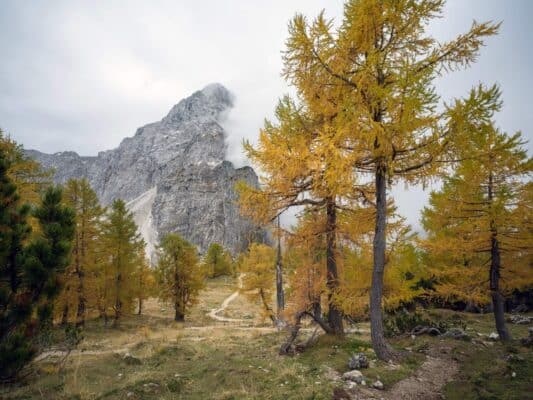
Mountain pass Vršič, Slovenia, Travel brochures of Slovenian Julian Alps, Triglav National Park, Slovenia
The myths and legends of Triglav National Park
This post is also available in:


The myths and legends of Triglav National Park
The myths and legends of Triglav National Park
The myths and legends of Triglav National Park
Protected as Triglav National Park for more than 30 years, the Julian Alps are generally considered to be the part of Slovenia which symbolises the country’s and the nation’s most precious assets: well-preserved nature of breath-taking beauty, and the traces of man’s existence in this stunning natural environment captured in the area’s cultural heritage. The people who live here are like no other. Just like a tree growing high up on the mountain hardens and adapts to blustery winds, long and harsh winters and short summers, the people in the Alps have been toughened by their hard life in the meagre fields, forests and mountain pastures, only to soften at the images of indescribable beauty revealed by the exact unforgiving nature. This unyielding spirit is reflected in the area’s cultural heritage, in its houses, sheds, hayracks, and cultural landscape. Less obvious to the eye, but just as valuable, is the heritage of the spirit that comes to life in winter evenings by the fireplace and lives in the tales, myths and legends as well as in the traditional skills and crafts, work customs, celebrations and accents of people residing on all sides of the hills inside Zlatorog’s kingdom. This exhibition and TNP’s 2016 calendar bring 12 impressions of the hidden corners of Triglav National Park as they have been preserved in folk tales. These images are shaped and defined by the contemplation, admiration, respect and conservation of the unique harmony between nature and man.
The myths and legends of Triglav National Park
The myths and legends of Triglav National Park
Myths and legends of the area at the foot of Mt Triglav
Myths and legends of the area at the foot of Mt Triglav. Widely known for their natural beauty, the stunning mountains of Triglav National Park are the setting of many myths and folk legends that portray man‘s relationship with nature and its phenomena. Compelling, informative and humorous, the message behind the legends is relevant for all generations. The kingdom of Zlatorog will survive, and its beauty will be here to impress us for as long as this area is well taken care of and preserved in its pristine state. So, when you visit the land at the foot of Triglav next, be on the lookout for mountain fairies: they can surely help you find the right path to your destination.
Zlatorog
The mountain paradise above Komna used to be the home of kind-hearted white fairies. The fairies had a herd of mountain goats led by a white chamois buck with golden horns, called Zlatorog (Goldenhorn). Zlatorog’s horns were believed to be the key to the immense treasure hidden in the mountaintop garden. A young hunter from Trenta, who was raised by the white fairies, fell in love with a beautiful girl from the valley. He brought her bouquets of wild flowers that won her love. But a wealthy Venetian merchant proposed to the girl, gave her jewellery and told her that her hunter would bring her the golden horns of Zlatorog if he loved her dearly. The hunter, no longer in the girl‘s good graces, was desperate and deeply hurt. On that night, he set off to find the mythical animal. Early in the morning, he spotted Zlatorog on a high rock and shot him, but forgot about the chamois‘ magical powers. From the blood of the fatally wounded animal grew the Triglav Flower. Restored by the plant, Zlatorog thrusts towards the hunter. His shining horns blinded the terrified boy so that he slipped on a rock and fell into a precipice. The swollen Soča River brought the corpse to the valley. Zlatorog ravaged its mountaintop garden and disappeared for good, along with the white fairies. His treasure, however, remains hidden in the mountains at the foot of Triglav.
The Škrlatica Fairy
Kekec’s half-sister, Jerica, got lost in the mountains. On the slopes of Mt Škrlatica, she came across a cottage, in which a pale lady lay. It was Škrlatica, the mountain fairy, who only got ill every one hundred years. Should no kind soul come to her at such a time and bring her medicine, the fairy might die, and great misfortune would fall upon the people. The white lady asked Jerica to get her the healing Carniolan primrose, which bloomed on the slopes of the mountain. Jerica found the flower and brought it to the sick woman. Instantly, the woman recovered, changing into a beautiful lady in a purple dress, with a crown of pearls on her head. As a token of her gratitude, the Škrlatica fairy gave Jerica a Carniolan primrose blossom, a stunning purple dress and a gold necklace.
The myths and legends of Triglav National Park
The Pagan Girl
Ajdovska deklica, or the Pagan Girl, was a kind-hearted giantess who lived on the slopes of Mount Prisank. She would help mountaineers and other travellers to find their way through snow blizzards over the Vršič pass into the Trenta valley. As a fate deity, she also visited young mothers and foretold the destinies of the newborn children. One night, she prophesied the birth of a baby boy from Trenta who would grow up to be a hunter, kill Zlatorog, a golden-horned white chamois, sell the animal‘s precious horns and become incredibly rich. Angered by the prophecy, her fellow maidens decided to punish her. As soon as the heathen maiden returned to her mountain home, she turned into stone. To this day, she gazes in amazement down into the valley of Trenta, surprise still clouding her big, petrified eyes.
The Wild Man on Pokljuka
The loggers from Gorje once decided to catch the wild man who lived on the Pokljuka plateau and did a lot of bad things to the people. They lured him into an old shack, tied him up and dragged him to the valley. As they pulled him through Gorje, he begged them to set him free. He promised to tell them why so many people were buried in the Gorje cemetery. They loosened the ropes and promised to let him go. So the wild man said, “Because of spells.” The loggers were very satisfied with the answer and let the wild man go free. When they realised what he had told them, one of the men wanted to ask him about the cure against spells. But the wild man had already disappeared. And the people of Gorje continued to suffer and die from spells.
Vodobruhec (Water Spurt)
Once upon a time, the Trenta Valley was home to three gods: Triglav, Jalovec and Mangart. They were good gods and often helped local people in need. But then an evil giant Vodobruhec, or the ‚Water Spurt‘, sneaked into the valley. Water kept gushing out of his mouth when he arrived, and soon many villages were flooded. People complained to Jalovec about the intruder, but the good could not control the evil giant on his own. So he called his two colleagues, and together they caught Vodobruhec, tied him up, locked him into a cave and opened his mouth so that the water flowing out of it would feed the valley. To the present day, water bubbles forth from the cave in a spring called the Soča. The legend says that when the giant has served his penance, the Soča River will dry out.

The myths and legends of Triglav National Park
The Collapsed Mountain
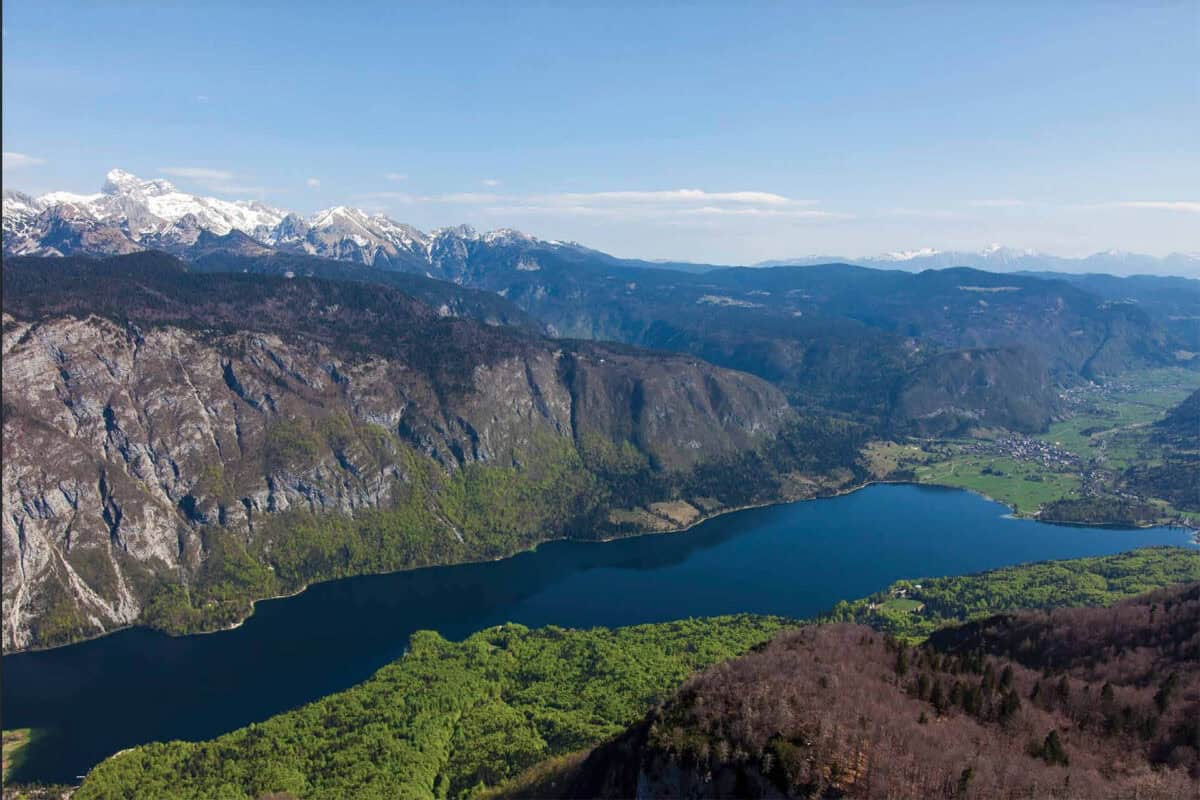
In the past, every mountain was believed to have both a spirit and a dragon. The two wrestled so fiercely that mountains would collapse during their fights, leaving behind gravel beds and rocks scattered across the entire Bohinj area. Back then, a mountain on the other side of the lake decided to rise higher than Triglav. Its spirit blew air into it to make it bigger, and its dragon lifted and shifted rocks to make it higher. A sound plan it was, but God would not let it happen. When the pretentious mountain rose nearly to the height of Triglav, it suddenly collapsed with a massive bang. All that is left of its dream is its name – Podrta gora (Collapsed Mountain).
The Brook of Malo polje
A long, long time ago, God created a lovely, clear brook in a mountain meadow of the Malo polje pasture. The brook was the centre of attention in the meadow, and the praise went to its head. He became arrogant and boisterous. Seeing this, the Creator wanted the brook to repent for its vanity and instructed it to disappear into the ground at the end of the meadow to cleanse. Sad and miserable, the brook could not bid farewell to its flowery meadow. It stopped sixty times, looking back towards the paradise at the foot of Triglav, but in the end, it had to do God‘s bidding and sink into the ground towards hell. It was not until much lower in the valley that the cleansed brook was allowed to resurface as the Mostnica Waterfall and the wild troughs of the Mostnica River.
Hudičev most (Devil‘s Bridge)
The legend tells of workers who built the bridge all day until evening, but when they returned the next morning, all their work was destroyed. Then one of the workers commented that the devil should make the bridge by himself. And the devil set to work, but in return, he demanded the first soul that would cross the bridge. One of the farmers had a dog, and a great idea: he threw a calf‘s bone to the other side of the bridge, and the dog ran after it. That‘s how the devil got its soul. Furious that it was only a dog‘s soul, the devil beat his tail and tore down the fence. The bridge, however, still stands today.

The myths and legends of Triglav National Park
Ledenec, the Ice Giant
In a mountain cave above Matruljek lived a giant called Ledenec. He bullied everyone who dared to come near him, breathed an icy breath, and danced and screamed with joy when it snowed. The only things he was scared of were the sun and fire. One day, he decided to have a mountain next to his cave. He called all the giants he controlled and ordered them to build one. The work was hard, and the giants soon tired of carrying rocks, but Ledenec would not let them rest. When he finally fell asleep in his cave, the angered giants stacked up a pile of firewood at the cave entrance and set it on fire. Unable to escape, Ledenec suffocated from the smoke and started melting. To the present day, his remains flow from under the Martuljek mountain group as the Martuljek stream.
The Mlinarica River
In ancient times, the parish priest in Trenta had some holy mass books, but the devil wanted to get hold of them so that he could use them for his magic. Always looking for the right opportunity, the devil eventually stole the books and then ran away as fast as only the devil can. When the priest noticed that several books were missing, he took some holy water and set off to find the devil. Seeing that the priest was catching up with him, the devil dropped the books and hit a rock so hard that it carved a vast cave. From this cave flows a stream called the Mlinarica.
Štefenajka
Below Rdeči rob above the Tolminka Valley lies a pasture called Sleme, where cattle from Zatolmin come to graze. There are cowsheds and a shepherd‘s dwelling and dairy, where milk is made into cheese and curd. Not far from the pasture is the steep ridge Kopa. This ridge used to be the home of a wild woman, divja baba, called Štefenajka. Shepherds were terrified of her. Every shepherd who was new on the pasture had to carry Štefenajka three times around his dwelling on his shoulders. If he could not do that, the woman would give him a stinky piece of bread with boogers on it and force him to eat it. Evil as she was, Štefenajka is said to have turned into a stone pillar in the shape of a woman. When the area was hit by an earthquake, Štefenajka collapsed and today no longer scares the shepherds on the pasture.

source: here
Accommodation in a mountain hut


 Slovenščina
 English
 English
 Bosanski
 Dutch
Dutch
 Hrvatski
 Čeština
 Dansk
Dansk
 Dutch
Dutch
 Suomi
Suomi
 Français
 Deutsch
 Magyar
 Italiano
 Polski
 српски
 Slovenčina
 Español
 Svenska
 Deutsch
Trips and Hikes around the hut




Your next destination in slovenia?

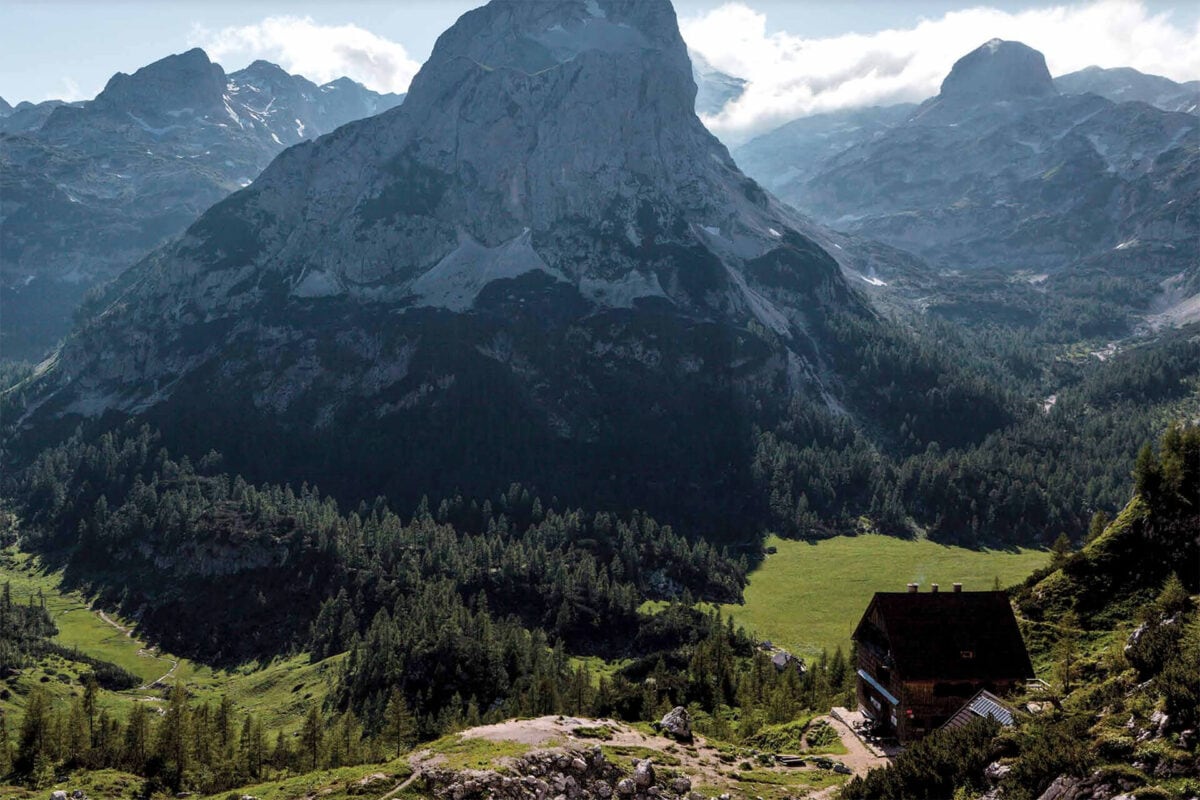
Erjavčeva mountain hut is open the whole year. Reserve your stay and spend some time in the natural paradise of Triglav National Park (UNESCO) near Kranjska Gora on Vršič mountain pass in the heart of Triglav National Park.
Reserve your stay
Slovenščina
English
English
Bosanski
Dutch
Hrvatski
Čeština
Dansk
Dutch
Suomi
Français
Deutsch
Magyar
Italiano
Polski
српски
Slovenčina
Español
Svenska
Deutsch
Souvenirs Online Shop

Gift Voucher

Stone


